
Trade Show Drayage: How Furniture Choices Cut Material Handling Fees
Trade show drayage (material handling) is the fee the show’s general contractor charges to move your freight from the loading dock to the booth and back. It is billed by weight, so the furniture in your booth usually decides the size of the bill more than anything else you ship.
This guide explains how material handling fees are calculated, which trade show furniture rental choices change the number, and when using an exhibitor-appointed contractor to deliver direct to the booth removes the furniture from the freight manifest entirely.
Key takeaways
- Drayage is billed per hundredweight (CWT) with a minimum per shipment, usually 200 lbs, plus surcharges for uncrated, late, and overtime freight.
- Furniture is typically the heaviest line on the manifest; lighter specs (acrylic or LED over wood) can cut hundreds of pounds from a 20×40 booth.
- One consolidated shipment beats three vendor shipments: one minimum, one target window, one dock appointment.
- Where the show permits, furniture delivered direct to the booth by an approved EAC is often not billed as drayage at all.

How is trade show drayage billed?
Drayage is billed by weight: the general contractor weighs each shipment at the dock and charges a published rate per hundredweight (100 lbs), rounded up, with a minimum per shipment. The rate and the minimum are in the exhibitor kit. On top of the base rate, most shows add surcharges that first-time exhibitors rarely budget for:
- Uncrated or loose freight (furniture on an open pallet, shrink-wrapped) is billed at a higher rate than crated or cased freight, often 20 to 30 percent more.
- Off-target arrivals: freight that misses the advance-warehouse window or ships direct to show site outside its target day.
- Overtime: move-in or move-out that falls on evenings, weekends, or holidays.
- Special handling: mixed loads, shipments that need a forklift to unstack, or pieces over the hall’s weight limits.
IAEE, the exhibitions industry association, publishes guidance on reading exhibitor kits. The practical rule is simple: weight, packaging, and timing each have a price, and furniture touches all three.
Why furniture is usually the biggest drayage line
Furniture is the heaviest, bulkiest category most exhibitors ship. A single 8ft wood bar can weigh more than all the graphics in a 20×20 booth. Multiply across lounge seating, counters, tables, and stools and the furniture is routinely half or more of the total shipment weight. The table below uses real weights from our rental catalog for pieces with the same footprint.
| Piece (same footprint) | Solid wood / upholstered | Acrylic / metal frame | LED panel |
|---|---|---|---|
| 6ft bar, 72 x 24 x 42 in | 140 lbs | 77 lbs | 50 lbs |
| 8ft bar, 96 x 24 x 42 in | 183 lbs | — | 79 lbs |
| 8ft wall panel, 48 x 24 x 96 in | 175 lbs (wood palette wall) | — | 73 lbs (LED acrylic pillar) |
| Bar stool | 36 lbs (upholstered swivel) | 13 lbs (Payton) | — |
| 6ft registration counter | — | 85 lbs (Blanc) | 110 lbs (illuminated) |
A 20×40 booth with two bars, a counter, eight stools, and a back wall specified in wood and upholstered pieces can easily reach 1,000 lbs. The same layout in acrylic and LED pieces lands closer to 500 lbs. Across an eight-show season that difference is several thousand dollars in material handling fees before anything else changes.

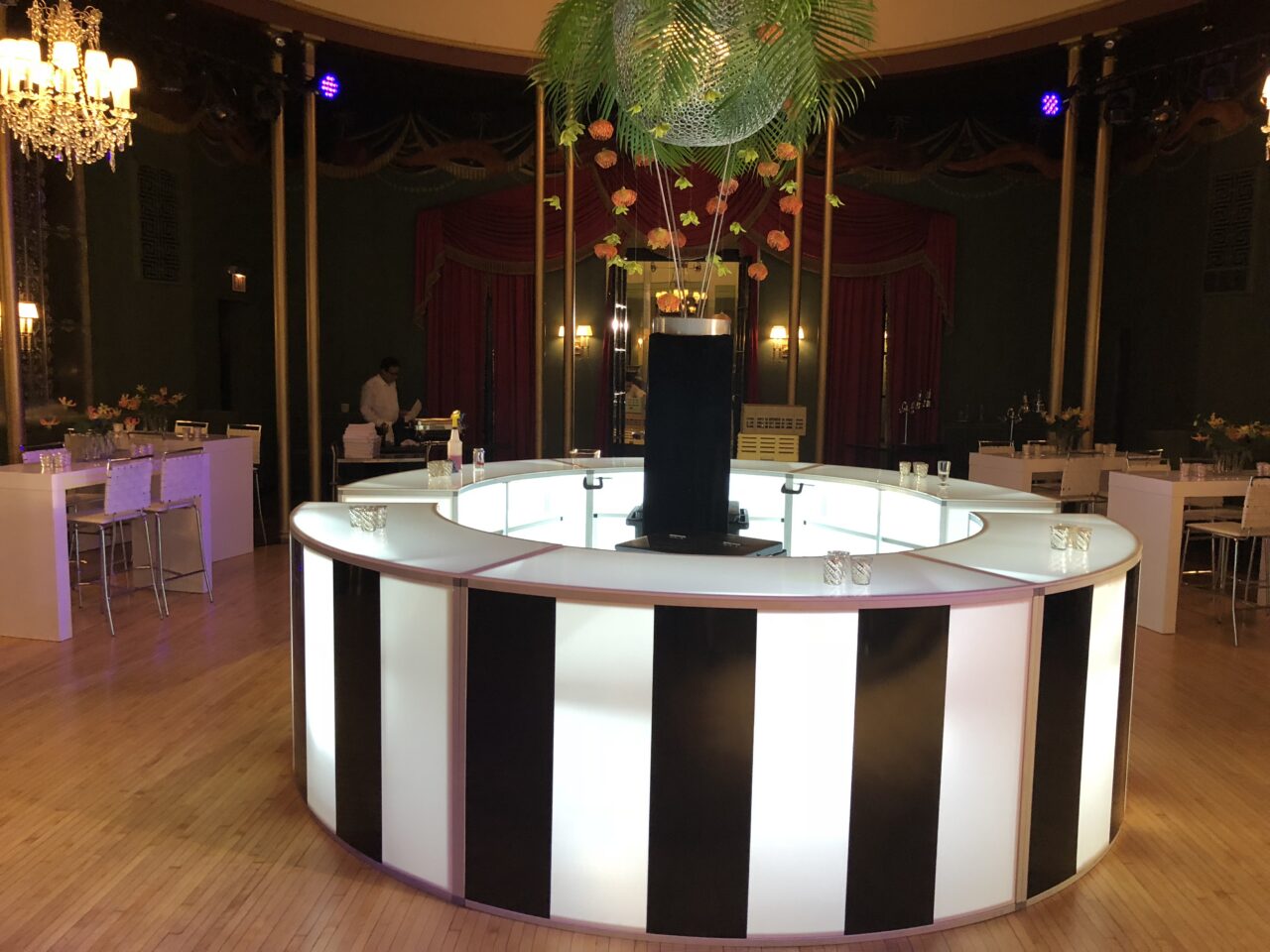
Five furniture decisions that lower material handling fees
1. Specify by weight, not just by look
Ask for the weight of every piece on the quote. Two bars that look the same in a rendering can differ by 60 to 90 lbs. Light-weight specs are cheaper to handle, easier to place, and safer for the crew on a tight move-in.
2. Ship crated or cased, never loose
Loose furniture on an open pallet is billed at the uncrated rate and arrives scuffed. Cased or crated freight is cheaper to handle and gets to the booth in show condition. If you own furniture, invest in cases; if you rent, ask how the vendor ships.
3. Consolidate to one shipment
Three vendors each sending a pallet means three minimums and three chances to miss the target window. One shipment, or one appointed contractor bringing furniture, scenic, and graphics together, is one minimum and one dock appointment.
4. Hit the advance-warehouse window
Freight received at the advance warehouse inside the published dates is handled at the base rate. Late freight and direct-to-site shipments on the wrong day carry a surcharge, and if they land on an overtime day, a second one.
5. Rent locally through an exhibitor-appointed contractor
This is the decision that can take furniture off the manifest entirely. Many shows allow an approved exhibitor-appointed contractor to deliver rental furniture straight to the booth during move-in without it passing through the dock as exhibitor freight. When the show permits it, drayage on that furniture is zero. Rules vary by show and venue, so confirm with the general contractor and register the EAC by the deadline in the kit.
How lightweight scenic changes the picture
Scenic is the second-heaviest category after furniture, and hard-wall structures are heavy by nature. Modular scenic cubes, illuminated pillars, and acrylic walls deliver a similar backdrop at a fraction of the weight, and they pack back into the same cases they arrived in.

What to ask a trade show furniture rental vendor
- What does each piece on the quote weigh, and how does it ship: crated, cased, or loose?
- Can you deliver direct to the booth as an exhibitor-appointed contractor at this show, and have you worked this hall before?
- Will furniture, scenic, and graphics arrive as one shipment or several?
- Who is on site for move-in and strike, and do they know the hall’s dock and marshaling-yard rules?
- If the show does not allow EAC delivery, will you ship into the advance warehouse inside the window?
If a vendor cannot answer the first question, they cannot help you with the bill. For what move-in and strike actually involve on a large order, see delivery, install, and strike behind a large event furniture order.
Frequently asked questions about trade show drayage
What is trade show drayage?
Trade show drayage, also called material handling, is the fee the show’s general contractor charges to move exhibitor freight from the loading dock to the booth and back out after the show. It is billed by weight, usually per hundredweight (100 lbs), with a minimum charge per shipment and surcharges for uncrated freight, late arrivals, and overtime.
How much does trade show drayage cost?
Rates vary by show and city but commonly run from roughly $100 to over $200 per hundredweight, with a 200-lb minimum per shipment. A 1,000-lb furniture shipment at $150 per CWT costs about $1,500 in drayage before surcharges. Check the exhibitor kit for the exact rate.
How does furniture affect drayage costs?
Furniture is often the heaviest item an exhibitor ships, so it drives the drayage bill more than graphics or AV. The weight of each piece, whether it is crated or loose, how many separate shipments arrive, and whether they arrive inside the target window all change the charge.
Can renting trade show furniture avoid drayage fees?
Often, yes. When the rental company is an approved exhibitor-appointed contractor (EAC) and delivers directly to the booth during move-in, many shows do not bill that furniture as freight. Rules differ by show and venue, so confirm with the general contractor before planning around it.
What is an exhibitor-appointed contractor (EAC)?
An EAC is an outside vendor the exhibitor hires to work on the show floor instead of using the general contractor, for example a furniture, exhibit, or AV company. EACs must usually be registered with the show in advance and carry the show’s required insurance.
What is the lightest trade show bar or counter to rent?
Acrylic and LED-panel bars are the lightest at a given size. In our catalog a 6ft LED bar weighs about 50 lbs and a 6ft black acrylic bar 77 lbs, versus 140 lbs for a 6ft wood bar with the same 72x24x42-inch footprint.
How we handle it
Modern Event Rental owns its inventory, fabricates much of it in-house, and specifies weights on every quote. Our crews coordinate with the general contractor on every show and, where the show permits, deliver, install, and strike direct to the booth as an exhibitor-appointed contractor. One shipment, one crew, one invoice, nationwide. Send us the show, the booth size, and the look and we will quote the furniture with the weight of every piece.