
Chicago Corporate Event Venues and Trade Show Venue Logistics Guide
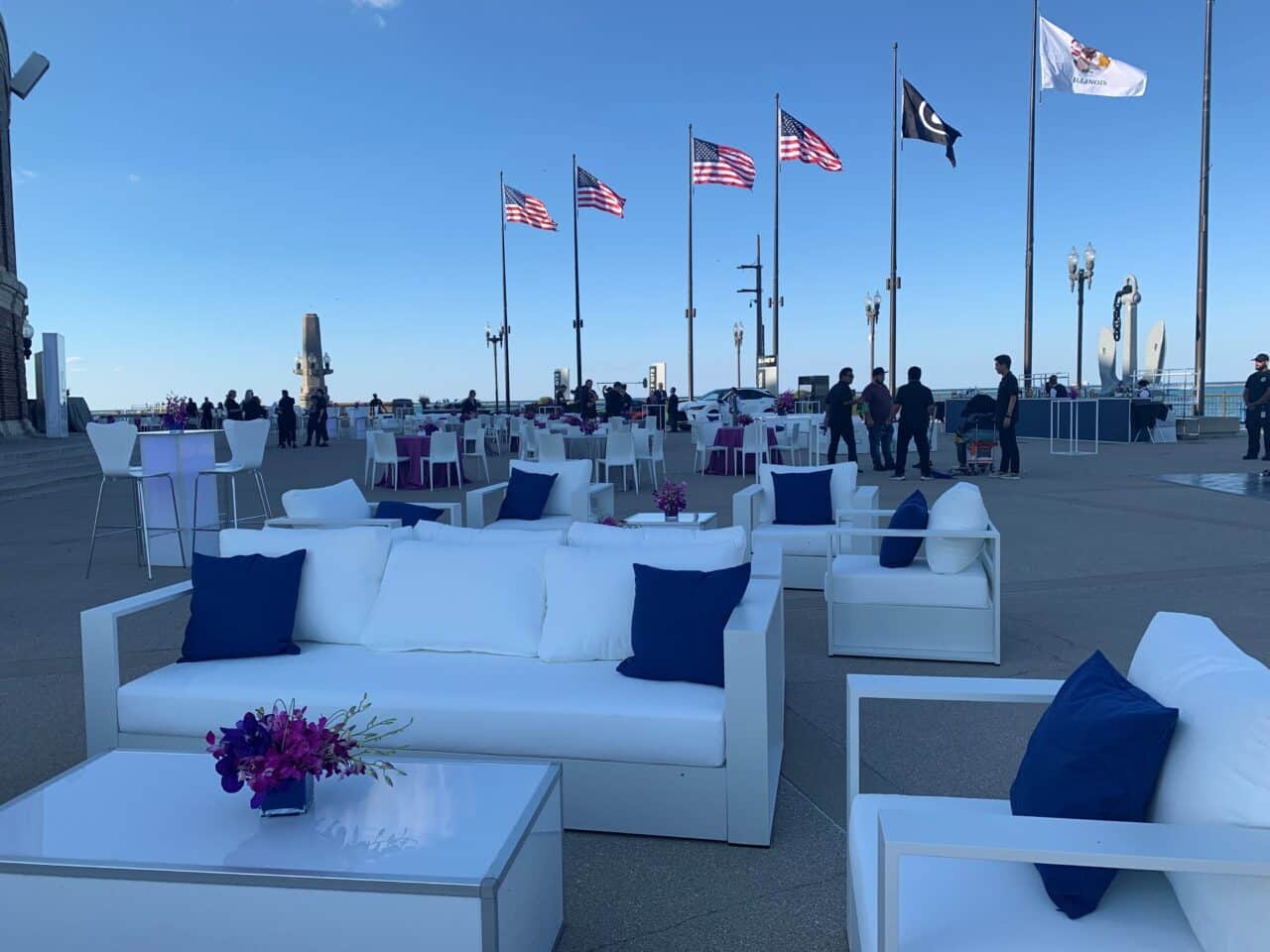
Chicago corporate event venues are some of the most diverse and operationally challenging event environments in the country. From McCormick Place trade shows and luxury downtown hotel ballrooms to industrial venues like Morgan Manufacturing, Venue West, and AVENUE, every location operates differently behind the scenes.
Most people planning corporate events focus heavily on furniture, décor, branding, and floorplans. What many fail to realize is that event problems usually begin long before guests ever walk through the doors. Successful event execution often comes down to logistics, freight access, installation planning, labor coordination, venue restrictions, and understanding how the building itself actually functions operationally.
At Modern Event Rental, we’ve worked across Chicago corporate event venues for years, supporting trade shows, conferences, networking lounges, experiential activations, executive events, hospitality environments, and large-scale corporate installations. The reality is simple: every venue requires a different strategy.
Chicago Corporate Event Venues All Operate Differently
One of Chicago’s biggest strengths as an event city is venue variety.
Corporate events may take place inside:
- convention centers
- luxury hotels
- industrial warehouse venues
- rooftop hospitality spaces
- converted manufacturing buildings
- experiential marketing environments
- private executive venues
Locations like:
- McCormick Place
- Morgan Manufacturing
- Venue West
- AVENUE
- Theater on the Lake
- The Geraghty
- downtown Hilton and Marriott ballrooms
…all create completely different operational conditions for:
- truck access
- freight delivery
- labor movement
- furniture installation
- staging
- load-in timing
- ceiling restrictions
- flooring protection
The same event setup strategy does not work across all Chicago corporate event venues.
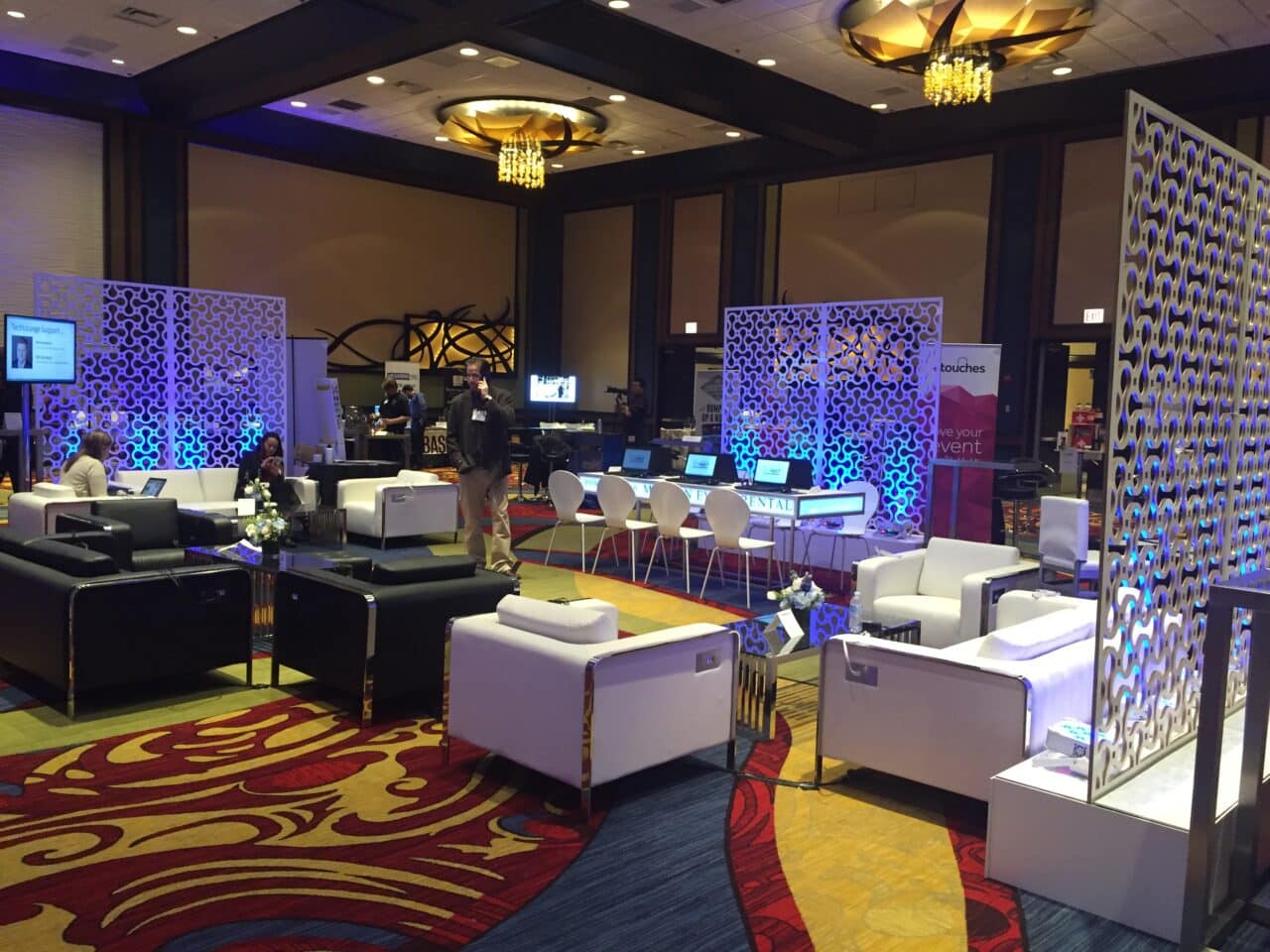
Trade Show Venue Logistics Matter More Than Most Event Planners Realize
Trade show venue logistics directly affect how efficiently an event installs, operates, and dismantles.
A furniture layout may look excellent on paper, but if oversized pieces cannot fit:
- through freight doors
- inside elevators
- down service corridors
- around loading docks
- through alley access points
…the installation immediately becomes more difficult and more expensive.
This happens constantly in Chicago because many venues were not originally designed for modern large-scale experiential events.
At some venues:
- truck access is limited
- loading windows are strict
- staging space barely exists
- elevators are undersized
- alley access restricts trailer size
- labor paths become congested quickly
Understanding venue logistics before installation day prevents major operational problems later.
McCormick Place Requires a Completely Different Installation Strategy
McCormick Place operates differently than almost every other Chicago venue.
It is not simply a convention center — it is a highly coordinated operational environment involving:
- marshaling yards
- union labor structures
- freight timing
- dock assignments
- aisle restrictions
- labor jurisdictions
- material handling coordination
One delayed truck or incorrect delivery schedule can impact an entire installation timeline.
Trade shows at McCormick Place require:
- accurate freight planning
- coordinated labor timing
- proper installation sequencing
- experienced onsite logistics management
Large-scale trade show execution is rarely about simply delivering products. It is about operational coordination.
Industrial Chicago Event Venues Create Different Challenges
Industrial venues like Morgan Manufacturing and Venue West create a completely different set of installation conditions.
These venues often involve:
- alley-based load-ins
- tight truck access
- limited staging areas
- exposed concrete floors
- freight elevator restrictions
- rigging limitations
- non-traditional layouts
Some spaces prohibit:
- standard dollies
- dragging equipment
- wall attachments
- ceiling hanging
- specific flooring materials
Others require:
- floor protection
- approved rigging vendors
- overnight installation schedules
- strict freight timing
This is where operational experience becomes critical.
Event Furniture Selection Is Also a Logistics Decision
Many planners select event furniture based purely on appearance.
Experienced event teams know that operational functionality matters equally.
A registration counter, communal bar table, scenic wall, or LED bar may:
- fit the event branding perfectly
- look visually impressive
…but still create major problems if:
- it exceeds elevator dimensions
- it cannot navigate freight paths
- it becomes difficult to install inside the venue
- it restricts guest movement onsite
Corporate event furniture should work both aesthetically and operationally inside the venue environment.
Why Communication Problems Hurt Corporate Events
Many large event structures involve too many communication layers between:
- agencies
- event managers
- coordinators
- subcontractors
- logistics teams
- rental vendors
- onsite labor crews
As information moves through multiple channels, operational details often become diluted or delayed.
This can create:
- incorrect measurements
- missed venue restrictions
- freight scheduling issues
- installation delays
- labor inefficiencies
- unnecessary costs
The more filters added between planning and execution, the greater the risk of miscommunication.
Strong corporate event execution usually comes from direct coordination between experienced vendors and event organizers.
Bigger Event Vendors Do Not Always Mean Better Event Execution
One of the biggest misconceptions in the trade show industry is that larger vendor organizations automatically provide better service or stronger operational performance.
In reality, many larger event structures involve:
- significant administrative overhead
- outsourced inventory
- subcontracted services
- multiple management layers
- brokered logistics
At the physical level, however:
- the same trucks still arrive
- the same labor crews still install the event
- the same products still move onto the show floor
Additional management layers do not reduce operational complexity. In many cases, they simply increase communication filters and project costs.
Corporate event budgets should prioritize:
- execution
- logistics
- inventory quality
- operational efficiency
- communication clarity
—not unnecessary organizational overhead.
Why Direct Vendor Experience Matters
Experienced event vendors understand how Chicago corporate event venues actually function in real-world conditions.
At Modern Event Rental, venue planning involves evaluating:
- freight access
- truck dimensions
- labor flow
- elevator limitations
- staging areas
- installation sequencing
- flooring restrictions
- product dimensions
- venue-specific operational rules
before products are loaded onto trucks.
This helps prevent:
- oversized furniture problems
- freight bottlenecks
- damaged flooring
- delayed installations
- labor inefficiencies
- rushed onsite corrections
Operational planning is often invisible when done correctly — but it is one of the biggest reasons successful events run smoothly.
Corporate Event Environments Require More Than Furniture
Modern corporate events and trade shows are no longer simple furniture installations.
Today’s environments often combine:
- registration systems
- networking lounges
- LED bars
- scenic structures
- sponsor activations
- hospitality environments
- modular lounge layouts
- experiential brand spaces
Successful execution requires understanding how:
- logistics
- attendee flow
- installation timing
- branding
- venue restrictions
- labor coordination
all work together simultaneously.
That knowledge only comes through real venue experience.
Final Thoughts
Chicago corporate event venues all operate differently, and successful event execution depends on far more than attractive furniture or scenic pieces.
The strongest corporate event environments are built by teams that understand:
- trade show venue logistics
- venue access limitations
- freight coordination
- installation sequencing
- labor movement
- flooring restrictions
- operational planning
- real-world onsite execution
At Modern Event Rental, we’ve worked across convention centers, industrial venues, hotel ballrooms, hospitality spaces, and experiential environments throughout Chicago, helping planners create corporate event environments that are both visually impactful and operationally realistic.
That operational understanding is often what separates smooth event execution from stressful installation problems.
Frequently Asked Questions
What makes Chicago corporate event venues challenging for event installations?
Chicago corporate event venues all operate differently. Challenges can include alleyway load-ins, freight elevator limitations, truck access restrictions, floor protection requirements, limited staging areas, and strict installation schedules.
Why is venue logistics important for trade shows in Chicago?
Trade show venue logistics affect how efficiently products move into the venue, how labor is coordinated, and how quickly installations can be completed. Poor logistics planning can lead to delays, additional labor costs, and installation problems onsite.
Does McCormick Place require special event planning?
Yes. McCormick Place requires coordinated freight scheduling, labor planning, marshaling yard timing, dock assignments, and understanding of union regulations. Large-scale trade show setups require detailed operational coordination.
Can large furniture pieces create installation issues at Chicago venues?
Yes. Oversized registration counters, scenic elements, bars, and lounge furniture may not fit through freight doors, elevators, or narrow access points if dimensions are not planned properly in advance.
Why do some Chicago venues restrict dollies and floor protection?
Many venues have finished flooring or historic surfaces that require protection during installation. Some locations prohibit certain dollies, dragging equipment, or unprotected freight movement to prevent damage.
Why does direct vendor communication matter for corporate events?
Direct communication helps reduce miscommunication between planners, logistics teams, labor crews, and vendors. Fewer communication layers often lead to faster problem-solving and smoother installations.
Do larger event vendors always provide better operational execution?
Not necessarily. Larger organizations may involve additional administrative layers, subcontractors, and outsourced logistics that can increase communication complexity without improving the actual onsite execution.
What types of event environments does Modern Event Rental support?
Modern Event Rental supports corporate conferences, trade shows, networking lounges, sponsor activations, hospitality environments, experiential events, and large-scale corporate installations throughout Chicago.
Back To Blog