How to Choose a Corporate Event Furniture Rental Company (And What to Ask)
You’ve locked the venue. The agenda is set. Now comes the part most planners underestimate: furnishing the space in a way that actually reflects the brand, serves the crowd, and holds up through a full day of programming.
Choosing the wrong corporate event furniture rental company doesn’t just create logistical headaches — it can undermine the entire look and feel of an event that took months to plan. The good news is that if you know what to look for, the right partner becomes obvious quickly.
Here’s a practical guide to evaluating your options, with the questions you should be asking before you commit.
1. Understand What You’re Actually Buying
The event furniture rental industry looks more uniform than it is. On the surface, most companies offer tables, chairs, lounge seating, and basic staging elements. But beneath that, there’s a wide gap between what different vendors can actually deliver.
Commodity rental companies (think national chains) carry large volumes of standard, widely available pieces. You’ll recognize the furniture because you’ve seen it at dozens of other events. Lead times are predictable, pricing is often competitive, and logistics are handled at scale — but customization is limited and your event will look like everyone else’s.
Custom fabrication companies design and build proprietary pieces — curved seating configurations, branded bars and counters, LED-integrated furniture, modular scenic elements — that don’t exist anywhere else. These vendors work more like production partners than equipment suppliers.
Most planners assume they need the first type. But if your client cares about brand presence, differentiation, or visual impact, you likely need at least some of what the second type offers.
The key is knowing which you’re talking to — and many companies blur the line without being upfront about it.
2. Ask About Their Actual Inventory
This is the question most planners forget to ask: Do you own what you’re quoting me, or are you sourcing it from someone else?
Some rental companies act as brokers, pulling pieces from multiple vendors and adding a markup. Others own their full inventory. The difference matters for a few reasons:
- Quality control is harder when items come from multiple sources
- Availability is less reliable when you’re dependent on a third party’s schedule
- Customization is nearly impossible if the vendor doesn’t control the product
Ask directly: Is this piece in your warehouse, or are you sourcing it? A reputable company will answer without hesitation.
If you’re considering any kind of custom or branded element — a bar wrapped in your client’s colors, a counter with integrated signage, modular seating in a proprietary configuration — you need a vendor who fabricates in-house. Otherwise, what gets delivered is rarely what was pitched.
3. Evaluate Their Experience With Corporate Events Specifically
Not all event experience is the same. A company that does a high volume of social events may not have the operational structure to handle a three-day general session for 800 attendees, a trade show activation with a compressed install window, or a pharmaceutical conference with strict compliance considerations.
Corporate events have distinct requirements:
- Tight delivery windows — convention centers and hotels often have strict load-in and load-out times
- Brand consistency — every piece needs to photograph well and align with client standards
- Coordination with multiple vendors — AV, production, catering, venue ops all share the floor
- Reliability above all — there’s no fallback when 200 guests arrive at 8am
Ask for examples of similar work. Look for companies that regularly serve corporate clients — agencies, Fortune 500 companies, associations — rather than those for whom corporate events are a secondary market.
4. Ask About Their Fabrication Capabilities
If any part of your event requires something that doesn’t exist in a catalog, you need to know upfront whether your vendor can build it.
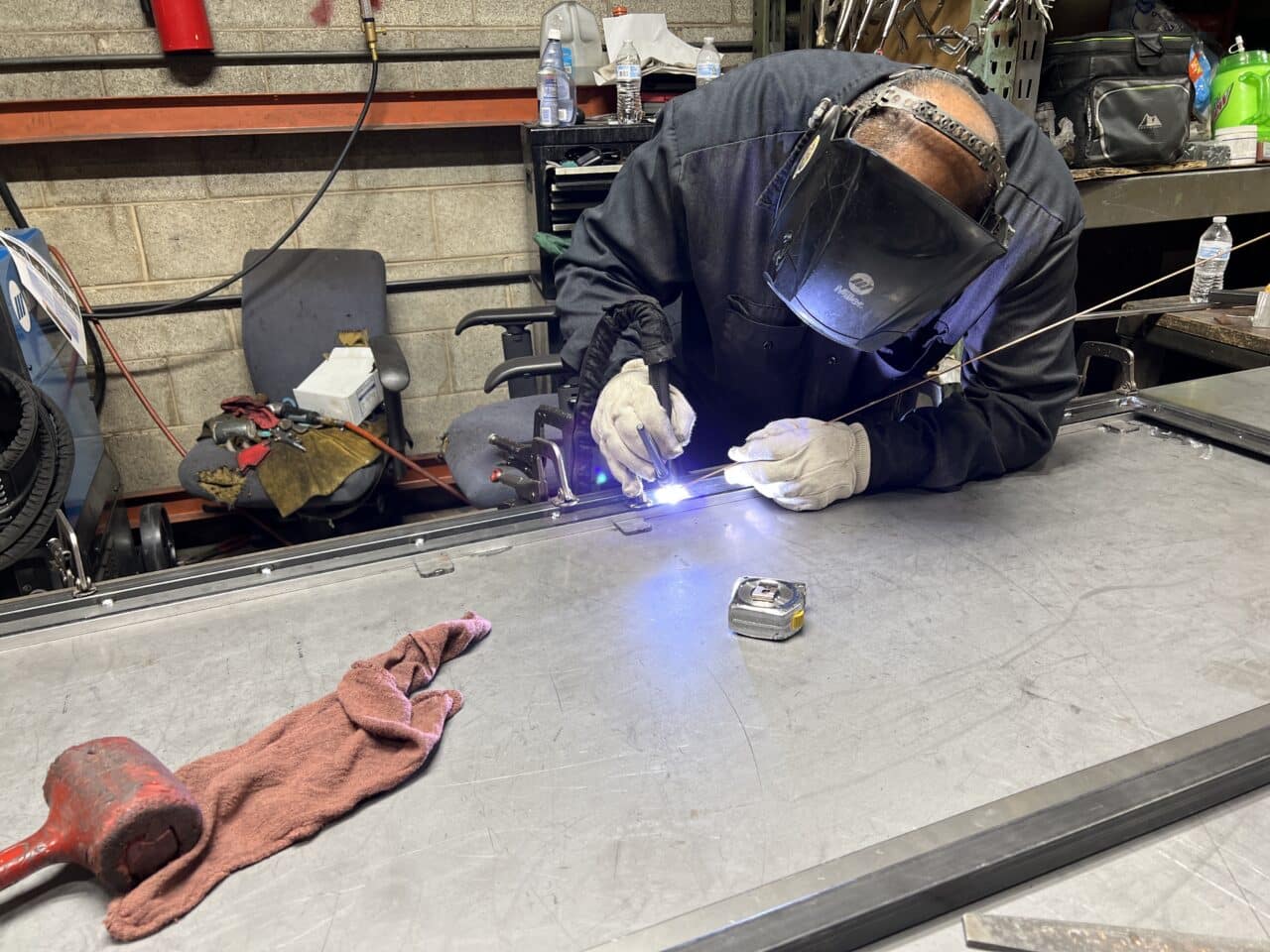
Custom fabrication is not a universal capability. Most rental companies don’t do it at all. Of those that do, the level of sophistication varies considerably — there’s a wide gap between a vendor who can do basic vinyl wraps and one running a 24,000 square foot production facility capable of building curved LED bars, illuminated counters, or large-format modular structures.
Good questions to ask:
- Do you fabricate custom pieces in-house?
- Can I see examples of custom builds you’ve done for past clients?
- What’s your typical lead time on a custom fabrication piece?
- Do you have structural and electrical capabilities for LED-integrated furniture?
The answers will tell you quickly whether “custom” means a paint finish or a full production build.
5. Understand Their Delivery and Installation Process
Furniture rental isn’t just about the pieces — it’s about what happens from the moment the truck pulls up to the moment the last item clears the venue.
Ask specifically:
- Who handles delivery and installation — your own crew or subcontractors?
- Do you have experience working in this venue (or venues like it)?
- What does your load-in and load-out process look like for a job this size?
- What happens if something is damaged in transit or doesn’t arrive on time?
A company that uses its own trained crew will always outperform one that outsources last-mile labor. The people who install the furniture should know it — how it assembles, how it travels, how it behaves under event conditions.
6. Look for a Portfolio That Matches Your Scale
A company’s portfolio tells you more than any sales conversation. Look for events at a similar scale and complexity to yours.
Specifically, look for:
- Multi-element installs, not just individual product shots
- Brand activation environments, not just room shots
- Large-scale or multi-day events
- Work for recognizable brands or in recognizable venues
If the portfolio is thin, generic, or heavy on social events, that’s a signal. If you can see a clear track record of handling corporate work at a high level, that’s a company worth taking seriously.
7. Ask the Questions Most Planners Skip
Beyond the basics, here are the questions that separate good vendors from great ones:
“What’s your contingency plan if a piece is damaged before my event?” Strong vendors carry backup inventory or have fabrication capacity to replace damaged pieces. Weak ones shrug.
“Can you work with our production or AV team on floorplan coordination?” You want a partner, not just a supplier. Vendors who’ve worked alongside production companies understand how the pieces fit together — literally.
“Do you have experience shipping or delivering nationally?” If your events happen in multiple markets, a vendor limited to a single region creates complexity. Some companies operate nationally from a single headquarters; ask how they handle it.
“Who is my point of contact from quote to breakdown?” Account continuity matters. You shouldn’t be re-briefing someone new at every stage of the project.
8. Don’t Choose on Price Alone
This deserves to be said plainly: the cheapest furniture rental quote is rarely the best value.
The risk in corporate event furniture isn’t the cost of the furniture — it’s the cost of the event going wrong. A keynote general session with mismatched lounge seating, a brand activation with a bar that looks nothing like the render, or an install crew that runs three hours late — these failures cost far more than the savings from a lower bid.
When evaluating proposals, compare scope carefully. Two quotes that look similar on paper may have very different assumptions about what’s included: delivery fees, setup labor, damage waivers, and custom elements all vary significantly between vendors.
The right question isn’t who’s cheapest — it’s who gives me the most confidence that the event will look exactly right.
What Sets the Right Partner Apart
The best corporate event furniture rental companies share a few things in common: they own their inventory, they can build what doesn’t exist, they show up with their own crew, and they’ve done this at the level you’re asking for.
At Modern Event Rental, we’ve built our business around those standards. Our inventory is over 85% proprietary — custom-fabricated pieces that you won’t find at national commodity rental companies. We operate from a 24,000 square foot production facility, handle delivery and installation with our own team, and work with corporate clients, agencies, and brand activators nationwide.
If you’re planning a corporate event and want to talk through what’s possible, [reach out here] — we’re happy to walk through your project and give you an honest picture of what we can deliver.
Frequently Asked Questions
What’s the difference between a furniture rental company and a custom fabrication company? A standard furniture rental company carries stock inventory — pieces that are widely available and used across many events. A custom fabrication company designs and builds proprietary pieces in-house, including branded bars, modular seating configurations, LED-integrated furniture, and scenic elements. Some companies, like Modern Event Rental, do both. If your event requires any kind of unique or branded element, you need a vendor with in-house fabrication capability.
How far in advance should I book corporate event furniture? For standard rental pieces, four to six weeks is generally sufficient for most events. For custom fabrication — branded bars, counters, modular builds, or LED-integrated pieces — eight to twelve weeks is more realistic, depending on complexity. For large-scale events, activations, or jobs with tight install windows, earlier is always better. The more lead time you give, the more options you have.
Do corporate event furniture rental companies deliver and install, or do I arrange that separately? Most reputable companies handle delivery and installation as part of the service. The key question is whether they use their own crew or subcontract the labor — this matters for quality control and accountability. Always ask upfront whether setup and breakdown are included in the quote, or priced separately.
Can a furniture rental company work with my event’s production or AV team? Yes — and they should. Experienced corporate event furniture vendors are used to coordinating with AV companies, scenic production teams, venue operations staff, and general contractors. If a vendor seems unfamiliar with that kind of multi-vendor coordination, that’s a red flag for corporate work.
What happens if a furniture piece is damaged before or during my event? Ask this question directly before signing any contract. Strong vendors maintain backup inventory or have the fabrication capacity to replace damaged pieces quickly. Make sure you understand the vendor’s damage and replacement policy, and what their liability covers versus what falls to you.
Is it possible to rent custom-branded furniture, or does everything have to be off-the-shelf? Custom branding is absolutely possible — but not with every vendor. Companies with in-house fabrication can build pieces to match a brand’s colors, integrate custom signage, or create entirely unique configurations. If brand alignment matters for your event, ask specifically about fabrication capabilities and request portfolio examples of branded builds.
Do corporate event furniture rental companies ship nationally? Some do, some don’t. Many regional companies are limited to a specific metro area. If your events happen across multiple markets — or if you need a vendor who can handle a job outside their home city — ask explicitly how they manage national delivery and whether they have experience shipping to your target market.
How do I compare furniture rental quotes accurately? Look beyond the line-item total. Make sure each quote includes the same scope: delivery, setup, breakdown, and any custom work should be clearly itemized. Some vendors quote furniture only and add labor and logistics separately; others bundle everything. A lower number that excludes installation labor can end up costing more than a higher quote that includes it. When in doubt, ask each vendor to confirm exactly what is and isn’t included.
Back To Blog